
TCA is one of the main sensory risks associated with cork closures. Even in extremely low concentrations, it can compromise a drink’s aroma, flavour and authenticity.
In premium spirits, this risk carries even greater weight. Any sensory deviation can affect both the consumer experience and the brand’s perceived quality.
The B-100® process was developed to address this challenge, as its rigorous control helps ensure cork closures are free from TCA, as well as other sensory deviations.
What is TCA and why is it a problem?
This contaminant is responsible for sensory defects in the beverage and is often associated with mouldy, damp, or wet cardboard aromas.
Although it is often linked to what is known as “cork taint”, TCA is not found exclusively in cork, as it can also originate from contaminated materials, environments or surfaces.
That said, in beverages sealed with cork, the closure remains a critical control point.
For this reason, reducing the risk of TCA is essential to protecting the quality of the drink.
Why is TCA particularly critical in spirits?
Premium spirits demand sensory precision. Aroma, complexity and consistency are all part of the product’s value proposition.
When TCA is present, that experience can be altered, which may result in:
- Loss of consistency from bottle to bottle
- Complaints or returns
- Negative impact on brand reputation
- Reduced confidence in the product
How does the B-100® process work?
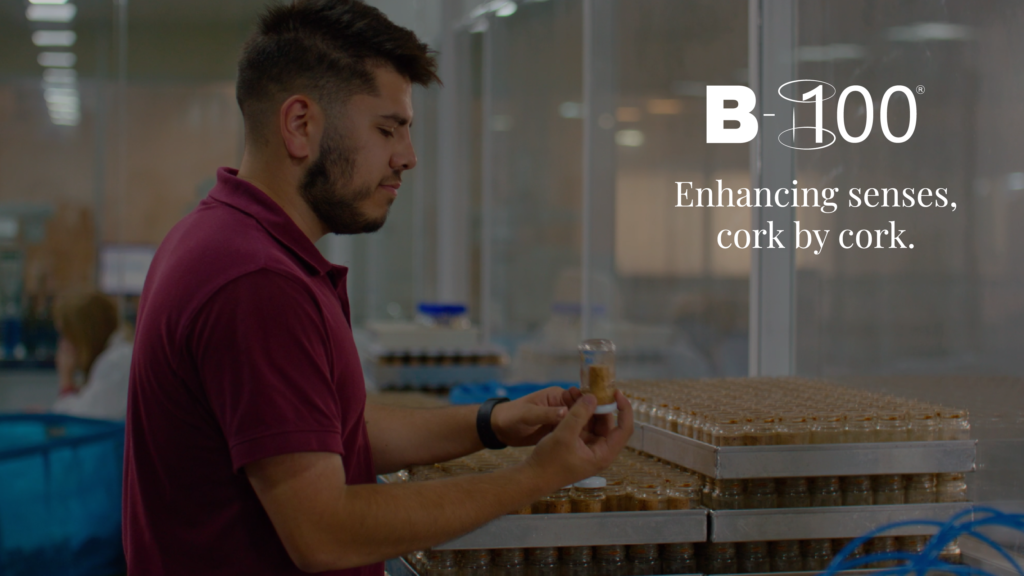
B-100® is based on Individual Sensory Analysis, carried out by a panel of highly qualified tasters.
Each closure is carefully examined, making it possible to detect any irregularity that could compromise the sensory experience of the drink.
This method ensures that only closures of the highest standard reach the bottling stage, delivering superior consistency and quality.
Scientific validation of TCA through GC/MS
In addition to sensory evaluation, B-100® is validated through sample-based GC/MS quantification, a benchmark scientific technique for detecting TCA.
This combination of technical rigour and sensory expertise makes it possible to offer the exclusive Bottle Buy Back Guarantee, ensuring the replacement of bottles in cases where TCA levels exceed 0.5 ppt*.
*Please contact us for further information
Why is the B-100® process an asset for premium brands?
The quality of a premium spirit is the result of many carefully controlled details, and the closure is one of the key elements in that balance.
The B-100® process helps reduce the risk of TCA and protect the spirit from the very start.
By ensuring rigorous control, it contributes to greater consistency and security. For premium brands, this means greater control over the consumer’s final experience.
Conclusion
TCA remains one of the main challenges in the sensory control of cork closures. In premium spirits, this control is essential to safeguarding the quality of the drink.
The B-100® process combines individual sensory analysis with advanced scientific validation. The result is a rigorous, reliable and excellence-driven control process.
If you are looking for high-performance cork solutions with rigorous quality control, contact us for more information.